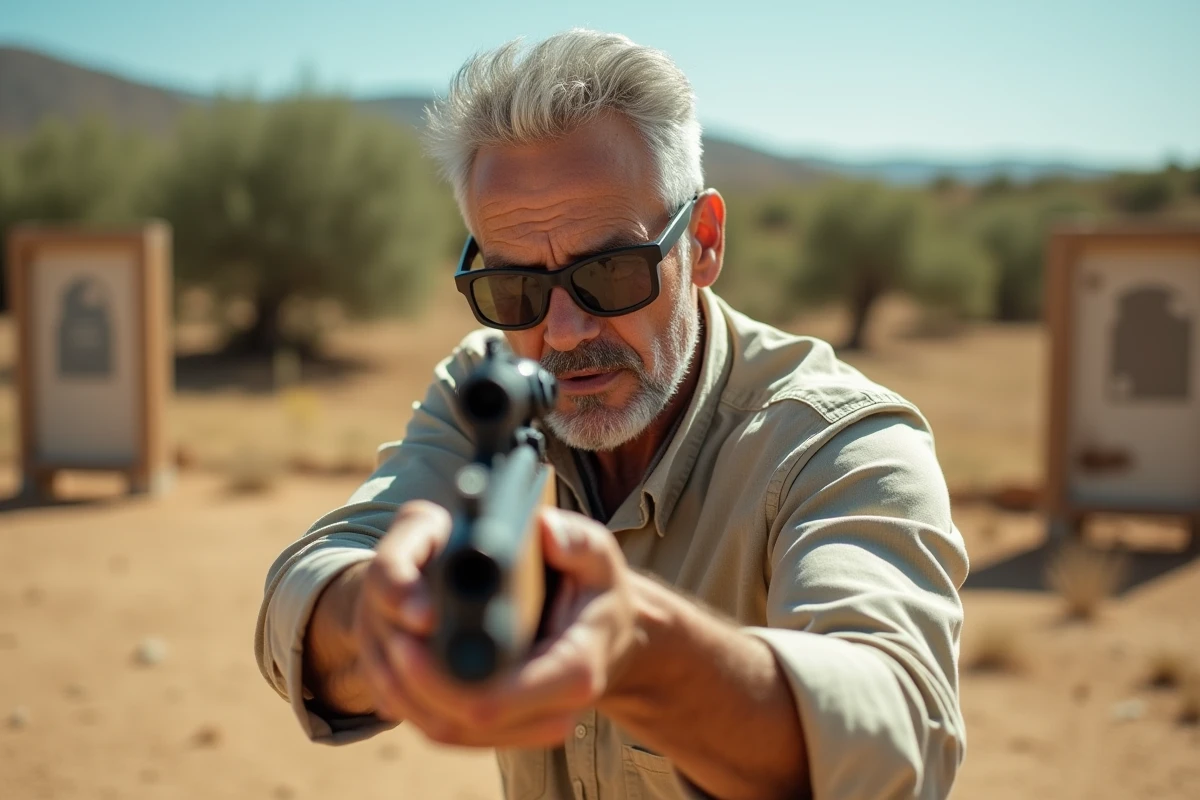
The Spanish legal framework applied to air rifles is based on a kinetic energy threshold that determines the category of the weapon, registration obligations, and usage conditions. Here we detail the technical and regulatory points that every shooter must master before acquiring or transporting a pellet rifle on Spanish territory.
Threshold of 24.2 joules and classification of pellet rifles in Spain
The threshold of 24.2 joules is the regulatory dividing line. Below this, the air rifle falls under the fourth category of weapons according to the Spanish Reglamento de Armas. Acquisition is possible upon reaching the age of majority, with simple presentation of an identification document, without a shooting license.
Registration remains mandatory with the local municipality (Ayuntamiento) of the holder’s residence. This formality is often overlooked by foreign buyers, while it conditions the legality of possession.
Above 24.2 joules, the rifle shifts into a higher category. It then requires a license issued by the Guardia Civil through the Intervención de Armas y Explosivos. This point is crucial: in Spain, unlike France which sets its limit at 10 joules for unrestricted sale, “full power” rifles are accessible but not exempt from control.
We recommend checking the actual power of any second-hand or modified rifle, ideally on a certified test bench. The value displayed by the manufacturer rarely corresponds to the effective measurement after the spring or PCP mechanism has been broken in.
Ballistic converters and reclassification by the Guardia Civil
Ballistic converters, devices that increase power or modify the nature of the projectile, have been subject to stricter regulations in recent years. The regulations regarding the use of pellet rifles in Spain are evolving precisely in this area.
The Guardia Civil now classifies rifles equipped with converters as licensed weapons, with registration under the corresponding category (generally category D or higher depending on the measured power). Specialized Spanish gun shops relay the positions of the Intervención de Armas y Explosivos and recommend having the actual power checked before any outdoor use.
Specifically, a rifle sold at less than 24.2 joules but equipped with a converter that propels it beyond this threshold changes its legal status. Possession without the appropriate license then constitutes an offense. This risk of reclassification also concerns shooters who import conversion kits purchased online.
Transport and authorized shooting locations: practical rules to know
The transport of an air rifle in Spain follows strict guidelines, whether the power is below or above the 24.2 joules threshold:
- The weapon must be unloaded and placed in a closed case throughout the journey, including during short movements between the vehicle and the shooting range.
- No shooting is allowed on public land, even at very short distances and even with a freely sold rifle. This includes open gardens visible from public roads.
- In the event of shooting on unauthorized land, immediate confiscation of the weapon is possible, even without any other offense being observed.
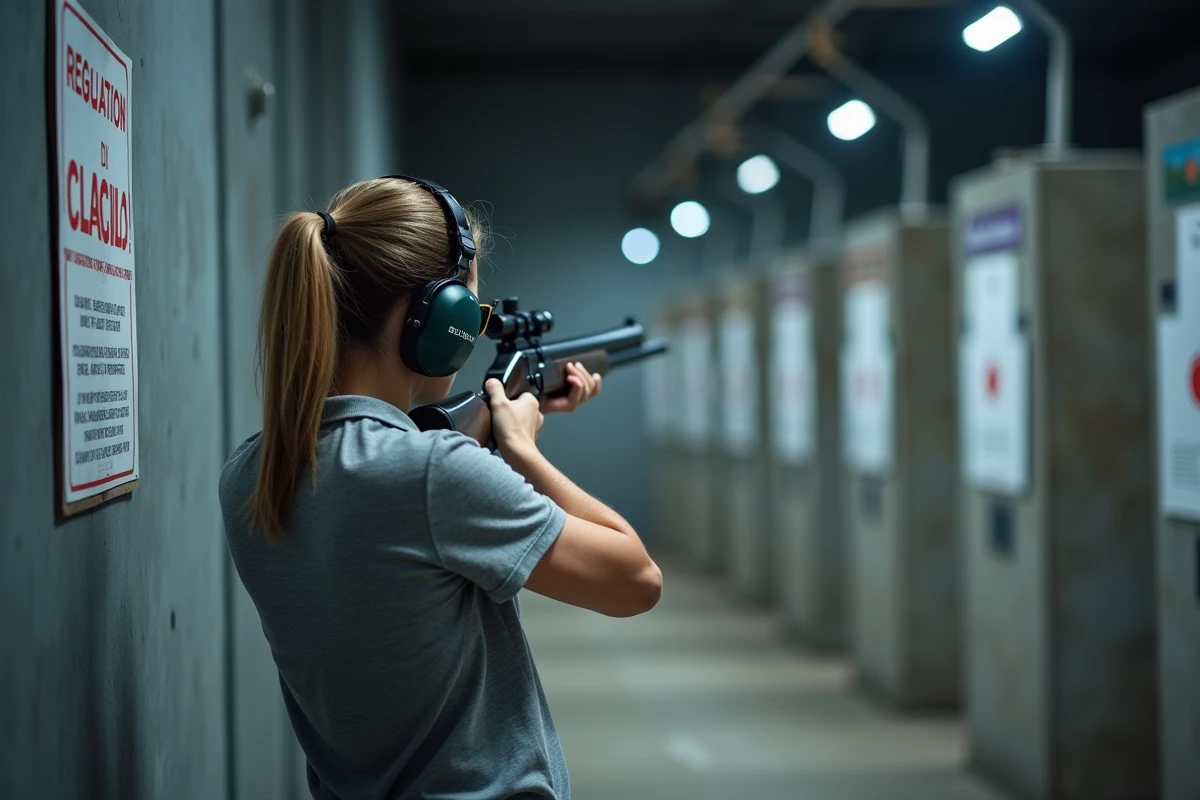
Authorized shooting areas include covered shooting galleries, ranges affiliated with a club, and private lands with specific authorization. Municipal galleries supervised by instructors are the safest option for beginner or visiting shooters.
We observe that Spanish authorities are increasingly directing practitioners towards these regulated structures, rather than informal outdoor shooting. This trend is confirmed in recent communications from local clubs and shooting sports federations.
Returning to France with a rifle purchased in Spain: declaration obligations
Buying a pellet rifle in Spain does not exempt one from French obligations. Any air rifle exceeding 10 joules must be declared at the prefecture once back in France. It then falls into the category of weapons subject to declaration under French law.
The absence of declaration constitutes illegal possession of a weapon. The difference in threshold between the two countries (10 joules in France, 24.2 joules in Spain) creates a common trap: a rifle freely sold in Madrid may require administrative declaration in Toulouse.
Before purchase, we recommend checking three points:
- The exact power in joules of the rifle, measured and not estimated by the seller.
- The compatibility with the regulations of the country of residence, not just those of the country of purchase.
- The terms of cross-border transport, as crossing the border with an undeclared weapon may lead to customs seizure.
Choosing a pellet rifle for use in Spain: technical criteria
The Spanish market offers spring, gas piston (Nitro Piston), and pre-compression (PCP) rifles. The choice of propulsion system affects power, shooting consistency, and maintenance costs.
Spring rifles remain the most common for recreational shooting. They are mechanically simple and do not require external recharging. PCP models offer superior accuracy and more consistent power from shot to shot, but they require a compressor or compressed air bottles, which complicates logistics.
For short-range gallery shooting, a spring rifle below the 24.2 joules threshold is more than sufficient. For Field Target shooting outdoors, Spanish shooters prefer PCPs whose power approaches the legal ceiling without exceeding it. Power control via a ballistic chronograph before each competition is common in affiliated clubs.
The caliber question also deserves attention. The 4.5 mm (.177) dominates precision shooting due to its flat trajectory. The 5.5 mm (.22) offers a more pronounced impact but a more parabolic trajectory, making it less suitable for long distances in Field Target.
The Spanish framework remains more flexible than the French framework regarding power accessible without a license, but this flexibility comes with registration obligations and transport conditions that would be risky to underestimate. The trend towards tightening regulations on ballistic converters confirms that authorities are closely monitoring practices, including for air weapons.