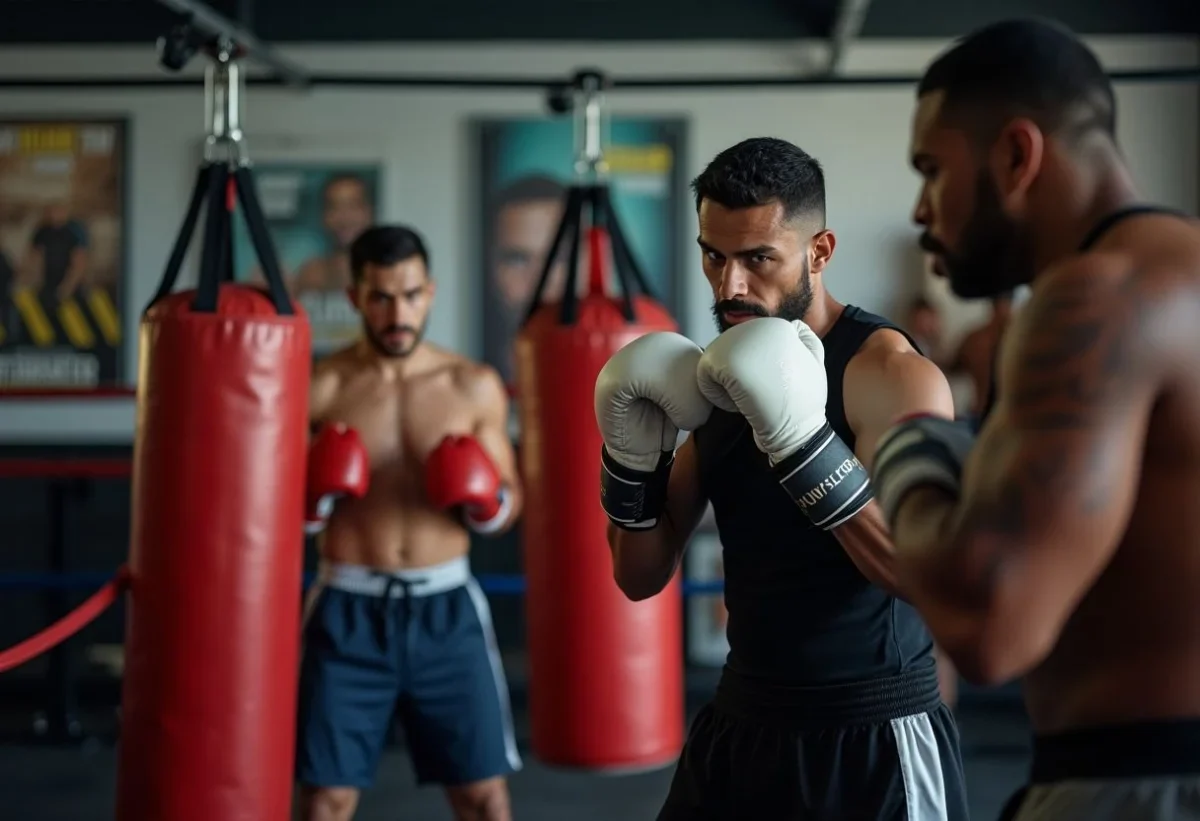
Boxing, this ancestral art, offers much more than just a physical fight. It is a dance between strength and strategy, between agility and power. For those looking to embrace this world, taking boxing classes can be a transformative experience. Whether you are a curious novice or a seasoned fighter, boxing classes guide you in learning fundamental techniques and help you develop a strong discipline. Boxing, with its unique combination of intense cardiovascular exercises and muscle development, is also an excellent way to improve your overall fitness.
The benefits of boxing classes
Diving into boxing classes offers a multitude of benefits that go far beyond simply acquiring technical skills. Through rigorous training, these classes transform both the body and the mind.
- Improvement of physical condition: Boxing is a complete workout that boosts endurance, strength, and coordination. Each session is an opportunity to push physical limits while improving agility and speed.
- Mental strengthening: Concentration and determination are essential skills. By learning to anticipate the opponent’s movements and react quickly, practitioners develop mental acuity and self-confidence that transcend the ring.
- Stress management: Releasing accumulated tension by hitting a punching bag is an excellent way to reduce stress. This physical outlet allows for channeling negative energy and brings a sense of well-being.
- Socialization: Participating in classes also means being part of a community. By interacting with other enthusiasts, boxers create strong bonds and share enriching experiences.
The different techniques taught
Boxing classes focus on a wide range of techniques that form the foundation of any good boxer. These techniques, taught with precision, are essential for evolving safely and effectively in the ring.
One of the first things learned in a boxing club in Paris is posture. A stable and balanced position is crucial for any movement. This is complemented by learning the different types of punches: the jab, the hook, the uppercut. Each punch is broken down so that the boxer masters the force, angle, and timing.
Defense is equally important, with techniques such as slipping, blocking, and footwork studied in depth.
Movement in the ring requires perfect coordination between the feet and the eyes, allowing for quick attacks and retreats.
Equipment needed for practicing boxing
One of the aspects to consider before starting is the equipment necessary for training effectively and safely.
- Boxing gloves: They are essential for protecting the hands and joints during impacts. Choosing gloves suitable for one’s level and body type is crucial.
- Bandages: They provide additional support to the wrists and hands, thus preventing injuries.
- Protective mouthguard: This item ensures the protection of the teeth and prevents oral injuries during sparring sessions.
- Headgear: Mainly used during training fights, it protects the head from repeated blows.
- Boxing shoes: Lightweight and flexible, they allow for quick movements and good traction on the ground.
How to choose your boxing class
Getting into boxing requires choosing the right class, tailored to personal goals and experience level.
To make a good choice, it is imperative to define your objectives. Do you want to improve your physical condition, learn self-defense, or get into competition? Next, research the instructors. A good coach not only has experience but also the ability to impart knowledge pedagogically.
Geographical proximity and class schedules are also factors to consider to ensure consistent attendance.
Finally, feedback from other students can be valuable in assessing the overall atmosphere and quality of teaching.