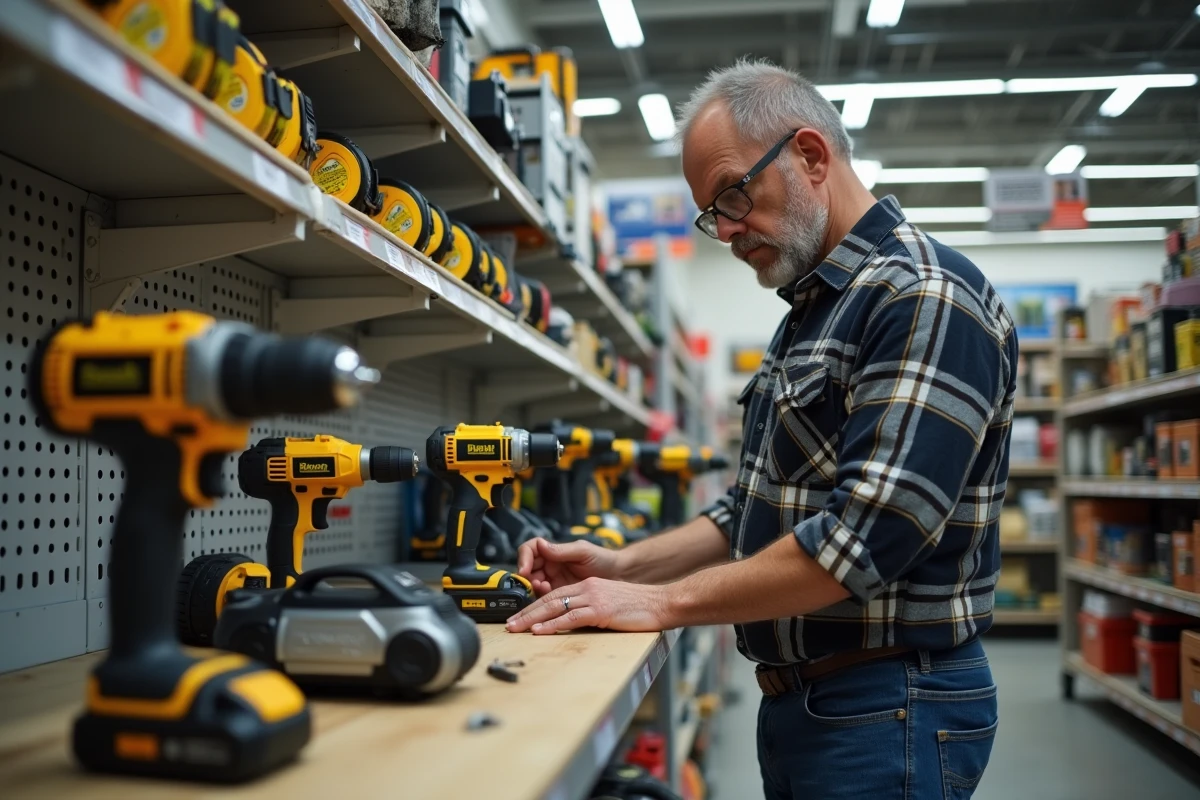
A universal screwdriver does not exist, but some manufacturers maintain the illusion despite the diversity of needs. The 2024 catalogs are full of innovations, yet the majority of users continue to buy incomplete or unsuitable kits. The labels “versatility” often mask technical compromises that are not very advantageous.
The price differences observed between two similar models sometimes exceed 150%, without clear justification or tangible performance improvements. Some historic brands are losing ground to newcomers focusing on modularity or ergonomics. Selection criteria are evolving, but purchasing mistakes persist.
What criteria should be prioritized for choosing DIY equipment in 2024?
Accumulating tools guarantees nothing. To make the right choice of DIY equipment, one must first understand the actual use, verify reliability, and focus on adaptability. Before investing, ask yourself a simple question: what will these tools actually be used for, and under what conditions? Efficiency starts with a rigorous selection, tailored to the nature of the work. A hammer is not a magic wand, nor is a drill driver. This comprehensive guide to choosing the best DIY equipment in 2024 encourages you not to be distracted by the promises of versatility displayed everywhere.
The quality of materials remains a sure value: hardened steel for blades, ergonomically designed handles for a proper grip, lithium-ion batteries for power tools. Enthusiasts of wood, plastic, or metal know that the robustness of a tool determines its lifespan. A simple tip: prefer a model that is easy to maintain and disassemble; you will keep it longer.
The quality-price ratio is assessed on several criteria, especially for equipment on Cécile Bricole. Examine the warranties, the ease of finding replacement parts, and compatibility with your current accessories. Choosing a saw or a spirit level that fits into a coherent range helps avoid duplicates and optimizes your workspace.
Here are the points to observe to refine your selection:
- Never neglect ergonomics: a tool designed for the hand causes less fatigue and limits the risk of injury.
- Check for the presence of standards (CE, ISO): they indicate a minimum level of technical seriousness.
- Target flexibility: a precise tape measure for delicate measurements, a saw suitable for the right material, a drill driver that adjusts well to both wood and metal.
An efficient workshop is characterized by the coherence of the tools and the reliability of the components. Ultimately, it is the alignment between actual need and use that makes the difference, much more than quantity or marketing.
Common mistakes when buying tools: how to easily avoid them
Equipping oneself hastily exposes one to a plethora of unpleasant surprises. Many succumb to the temptation of the lowest price or flashy novelty, without taking the time to identify their needs. The result is tools that are not really suitable, difficult to maintain, or quickly out of service. It is better to focus on the coherence of the range, check compatibility with your existing accessories, and pay attention to ease of maintenance.
To avoid the most common pitfalls, keep these simple rules in mind:
- An attractive price can hide an ultra-short lifespan or disappointing performance: beware of false bargains.
- Ignoring the manuals means disregarding usage or maintenance recommendations that, in the long run, affect safety.
- Nepotism in ergonomics always comes at a cost, especially during major projects.
Robust materials and serious warranties are reliable benchmarks. On Cécile Bricole’s buying guides, take the time to read user feedback, and identify tools that are widely recognized for their robustness or ease of use.
Finally, beware of “all-in-one” kits, which are synonymous with compromises on quality. Prefer modular solutions, with each tool chosen to fit your specific uses, whether for precision work or heavier projects. This vigilance, over time, makes all the difference in terms of satisfaction and longevity.

Overview of the best brands and recommended tools this year
In 2024, a clear trend emerges: focusing on reliable and high-performance tools that can satisfy both occasional DIYers and seasoned professionals. The drill driver remains the star of the home workshop, driven by the success of compact lithium battery models. Handy and efficient, they appeal to all profiles. For more demanding projects, the percussion version takes over, capable of tackling both masonry and metal.
On the cutting side, the reciprocating saw stands out. It excels in its flexibility, capable of cutting through wood, plastic, or soft metals, even in tight spaces. For alignment, the spirit level remains the reference for clean finishes, providing precision and peace of mind on all types of projects.
Here are some essentials to keep in mind:
- The impact wrench, a preferred ally for effortless tightening, favored by both professionals and knowledgeable amateurs.
- The rotary hammer, ideal for drilling or demolition without mess, appreciated for its controlled power.
The richness of the offer goes hand in hand with an increased focus on robustness. Prefer tools that come with a serious warranty. Interchangeable accessories compatible with multiple machines are becoming the norm, allowing for optimized investment. Some ranges stand out for their quality-price ratio, meeting the demands of experienced users as well as the needs of professionals. The workshop of tomorrow is built on robustness, coherence, and a reliability standard that does not deceive.