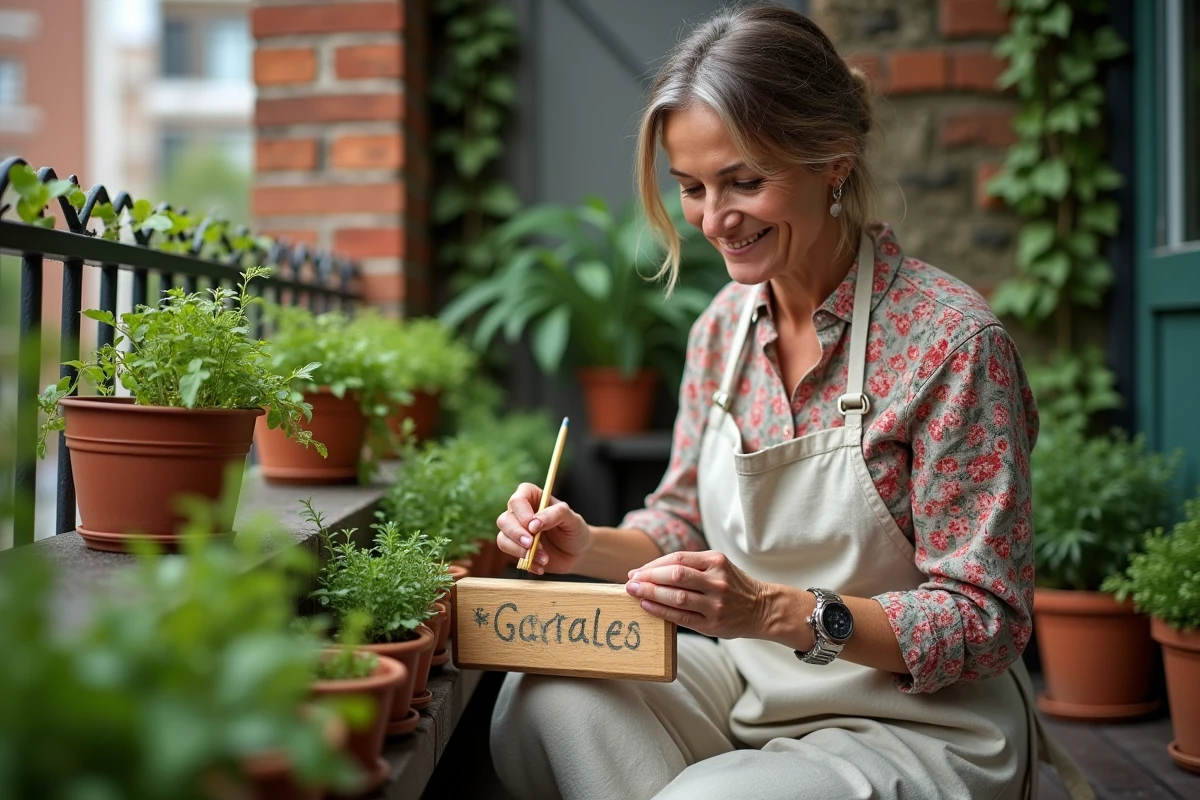
A small garden rarely has a name. People say “the garden,” “behind the house,” or “the piece of land.” Naming an outdoor space, even a modest one, gives it its own identity, a marker that facilitates the organization of plantings, communication with a landscaper, or simply an attachment to the place. The choice of an original name for a small garden is based on concrete methods, from local toponymy to the botanical characteristics of the plot.
Cadastral toponyms and local plant heritage for naming a garden
The most solid avenue for finding a name rooted in reality is local toponymy. Each cadastral plot carries an old place name, often linked to a bygone agricultural use, a stream, a tree species, or a relief feature. These micro-toponyms appear on cadastral maps available at the town hall or on the geoportal.
A garden located on a plot once called “Les Saulées” or “Le Clos du Noyer” inherits a ready-to-use name, rich in local history. This approach is documented as a factor of differentiation and identity appropriation, particularly in shared garden projects and urban micro-gardens.
The other variant is to rely on the local plant heritage: an ancient species still present (an old quince tree, a century-old boxwood hedge) or a plant reintroduced into the plot. Naming your garden “The Quince Garden” or “The Elderberry Square” anchors the name in an observable botanical reality.
You can also explore garden name ideas on Une Fleur Un Jardin to extend this reflection with examples categorized by theme.
Structure of a good garden name: length, sound, and readability
A garden name functions like a place name. It should be short, pronounceable aloud, and memorable after a single reading. Three words constitute a comfortable maximum. Beyond that, the name loses impact and becomes difficult to inscribe on a plaque or sign.
Sound is as important as meaning. Names that alternate vowels and consonants are easier to remember than accumulations of closed syllables. “Le Clos Vert” rolls off the tongue better than “Le Jardin des Plantations Basses.”
Four criteria to test a name before adopting it
- Say it aloud three times in a row: if it trips the tongue, it will also trip the memory of visitors, but in the wrong way.
- Write it on a physical medium (label, slate, plaque) to check that the length remains compatible with the intended format.
- Ensure it does not create confusion with a nearby street or subdivision name, especially if a sign is visible from the public road.
- Ask an outsider what the name evokes for them: if the answer does not relate to anything botanical or landscaped, the name misses its target.
Regulations and signage visible from the public road
Before engraving a name on a wrought iron arch or placing a plaque at the entrance, a regulatory point deserves attention. In some recent subdivisions, subdivision regulations require prior validation of the name with the property manager or the homeowners’ association (ASL). The goal is to avoid duplicates with street names and limit commercial mentions on fixed signs visible from the street.
This constraint mainly concerns signs, arches, and plaques installed at the property boundary. A name painted on a flower pot or engraved on a stone in the garden poses no problem. The distinction is made based on visibility from public space.
For a garden in a co-ownership or subdivision, a quick check of the internal regulations is enough to clear any doubts. In individual housing outside of a subdivision, freedom is almost total.

Concrete methods for finding an original name for a small garden
Beyond toponymy, several angles of creation produce names that hold up well.
Starting from the dominant atmosphere
A small shady garden does not have the same personality as a sunny Mediterranean square. The name can reflect this atmosphere: “The Cool Shade,” “The Dry Garden,” “The Fern Corner.” The atmosphere perceived by the senses better guides the name than the inventory of plants.
Using a word from another language
Japanese terms (tsubo-niwa for a miniature indoor garden), Latin (hortus for garden), or Occitan (òrt for vegetable garden) bring a touch of originality without falling into fancifulness. One foreign word is enough. Pairing it with a French word creates a readable contrast: “The Blue Hortus,” “Tsubo du Midi.”
Naming based on a use or a memory
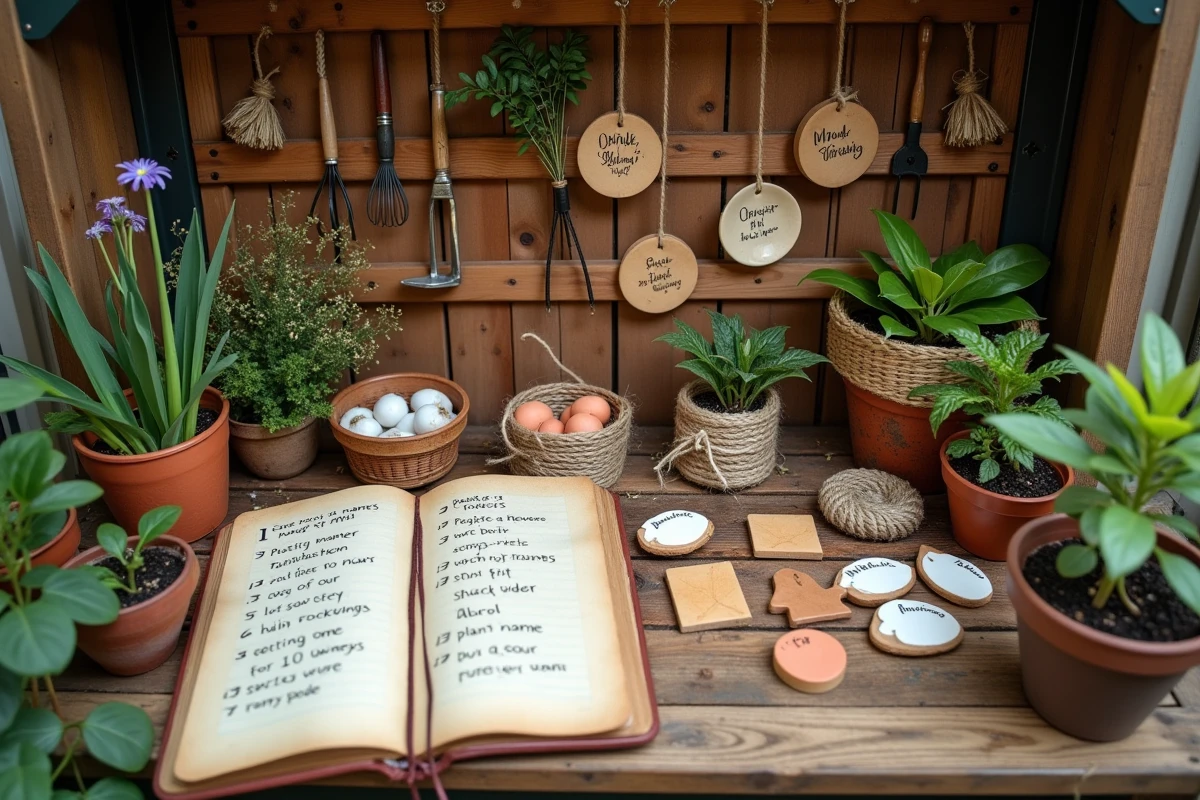
Some gardeners name their beds to keep track of their plant collection, organizing labels by area in a notebook. The name then becomes both an organizational tool and an emotional marker. “Grandma Jeanne’s Bed” or “The Seedling Square” serve this dual function.
- A name linked to a use (vegetable garden, rest, reading) remains relevant even if the plantings change.
- A name linked to a specific species (“The May Rose”) loses its meaning if the plant disappears.
- A name linked to a person or a memory transcends the seasons without aging.
The name of a small garden does not need to be spectacular. A good name describes what exists or what is experienced in that space, with enough precision for the place to become recognizable. Cadastral plots, existing plants, and the gardener’s habits provide the raw material. The rest is a matter of sound and common sense.