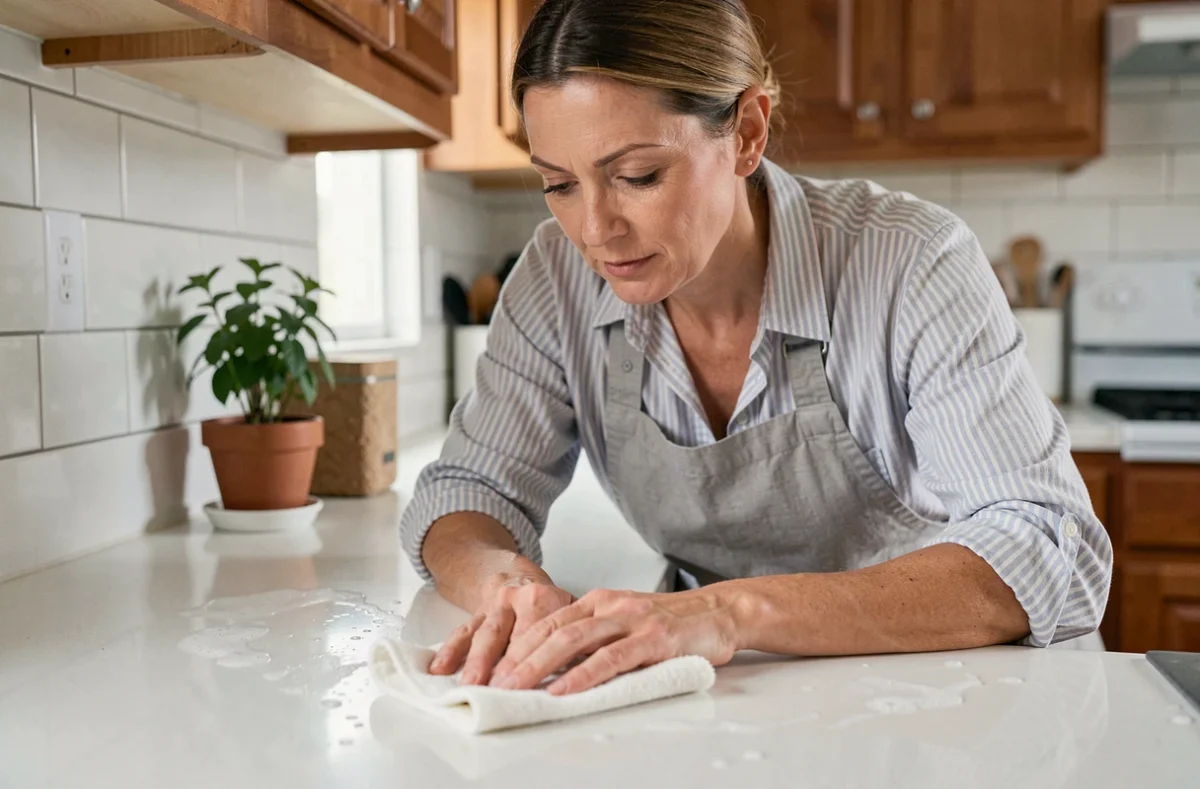
The daily cleaning of a house relies less on the time spent than on the order in which tasks are performed. Scrubbing a surface before dusting it off, or spraying a product without ventilation, simply moves dirt around and degrades indoor air quality. Effective cleaning follows a precise mechanical logic, from top to bottom, from dry to wet.
Mechanical cleaning before chemical cleaning: the forgotten foundation
Most household dirt, such as dust, crumbs, and hair, can be removed without any products. A quick vacuum followed by a damp microfiber cloth is sufficient for most surfaces and floors. ADEME and Anses recommend limiting the number and dosage of household products used daily.
This mechanical approach has a double advantage. It reduces exposure to volatile compounds and avoids chemical residues that accumulate on furniture, countertops, and frequently touched areas. In the presence of a sick person, common soaps and detergents may be enough to disinfect surfaces, according to recommendations shared by Vert.eco in September 2026.
Specifically, before reaching for a bottle, systematically go through these steps: vacuum or sweep (never dry, prefer a microfiber broom), then wipe with a damp cloth. The product only comes into play in the third step, on stubborn stains or greasy areas. By adopting this reflex, each room regains a good level of cleanliness in just a few minutes, with resources on leguidedunettoyage.fr detailing these methods by type of surface.
Spraying household products: precautions to know
Cleaning sprays are convenient, but their daily use poses a problem rarely mentioned by competitors: aerosols can be inhaled and come into contact with eyes or skin. INRS, in its document ED 4198 published in October 2025, clearly recommends avoiding spraying in favor of direct application on a cloth.
The action is simple to modify. Instead of spraying the product on the surface, pour a small amount onto a wipe or microfiber cloth. The result is the same, product consumption decreases, and exposure to fine particles drops significantly.
INRS also recommends avoiding dry sweeping and traditional dusting, which resuspend particles into the indoor air. Wet wipes or slightly damp microfibers capture dust instead of dispersing it.
Ventilate while cleaning, not just after
Opening windows after cleaning is a common reflex, but insufficient. Ventilation should start as soon as products are used, to evacuate vapors as they are emitted. The City of Paris, on its page dedicated to endocrine disruptors (updated in September 2026), recommends regularly airing out the home and avoiding spray products.
In practice, keep at least one window open in the room you are cleaning. If the home is cross-ventilated, create a draft. This action reduces the concentration of volatile organic compounds in the indoor air, particularly in confined areas like the bathroom.
Effective cleaning sequence room by room
Cleaning each room in a random order generates unnecessary back-and-forth and prolongs the cleaning time. A logical sequence follows two principles: work from top to bottom and from the back to the exit.
- Start by dusting high surfaces (shelves, tops of furniture, light fixtures) with a dry microfiber cloth, to let the dust fall to the floor
- Then clean intermediate surfaces (countertops, table, dishes) with a damp cloth or a mild detergent on greasy areas
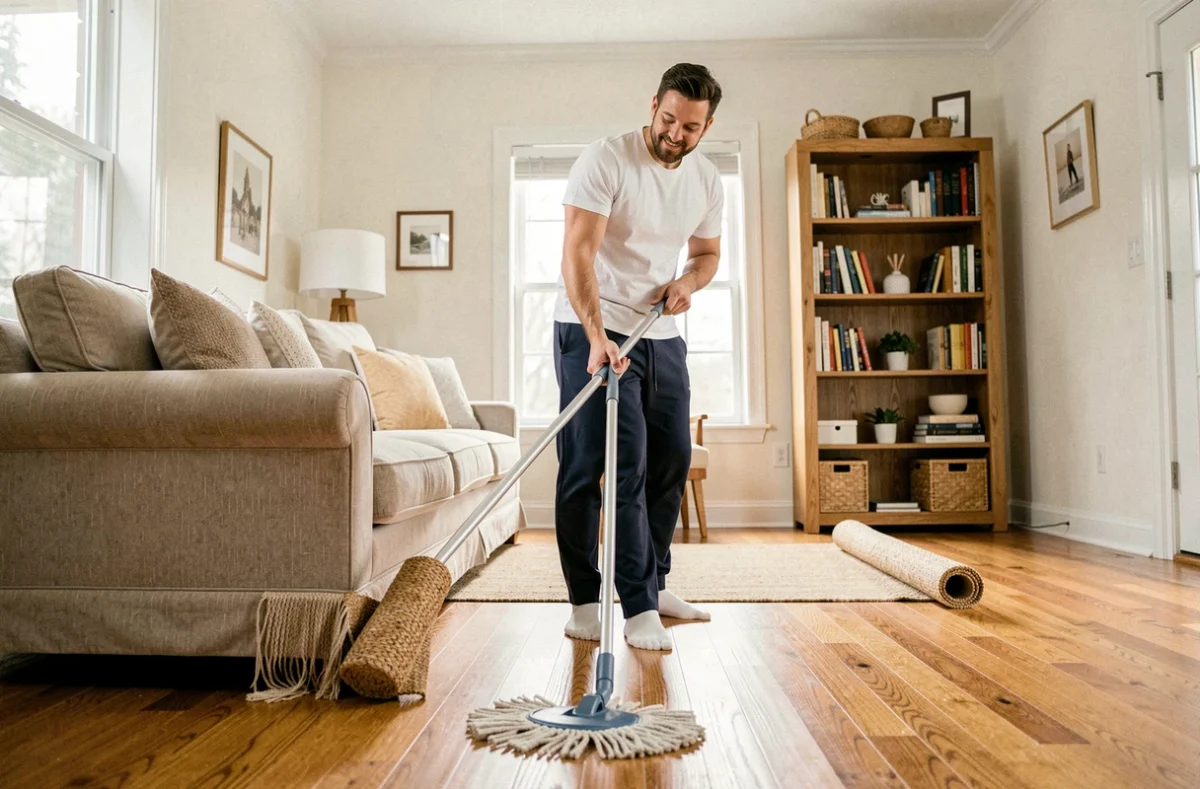
- Finish with the floors: vacuum first to remove particles that fell from the previous steps, then mop with a slightly damp mop
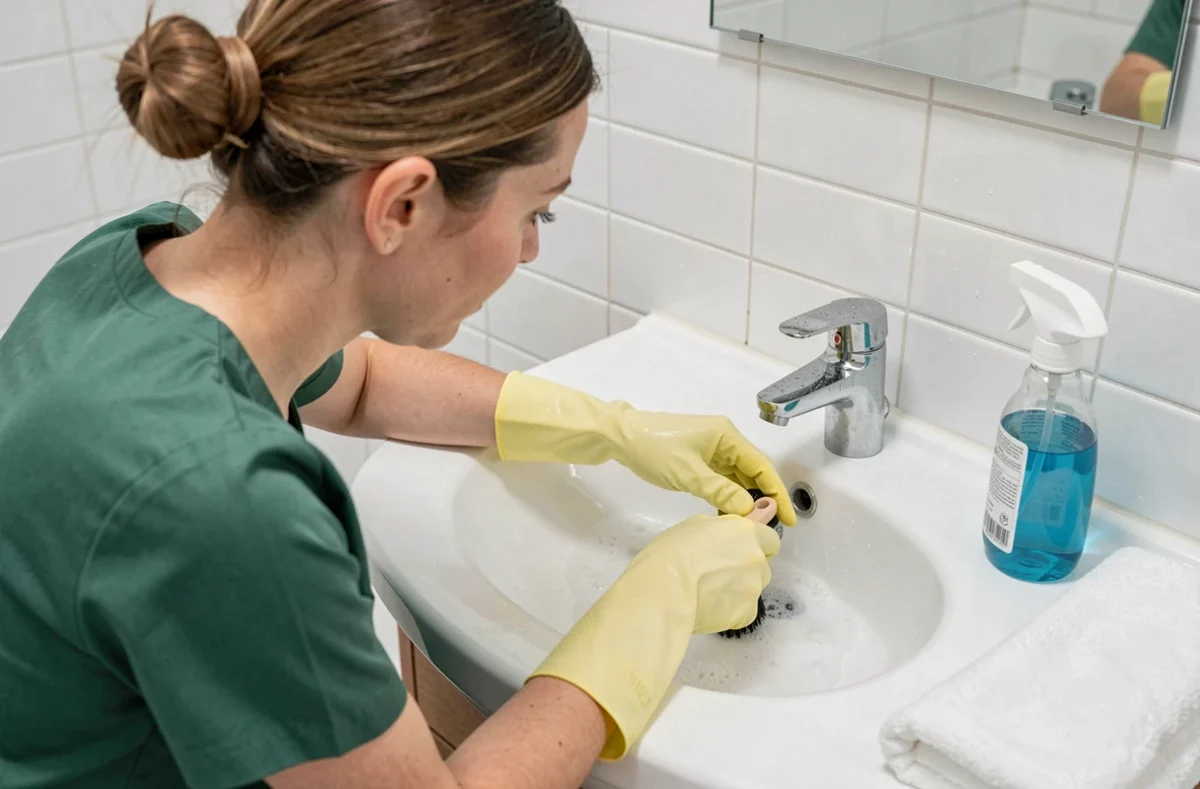
- Clean the bathroom last, as it is the room that accumulates the most moisture and limescale residues, sometimes requiring a pause for the product
This sequence prevents re-soiling a surface that has already been cleaned. Dust dislodged from above does not fall back onto a freshly washed floor.
Adjust frequency to high-traffic areas
Not all rooms get dirty at the same rate. The kitchen and entrance accumulate the majority of daily dirt. Focusing efforts on these high-traffic areas reduces the total cleaning time without sacrificing overall cleanliness.
Bedrooms and the living room require less frequent floor maintenance, but regular dusting of furniture and textiles is necessary. The fibers of sofas and curtains trap dust: a vacuuming with an appropriate attachment, once or twice a week, is enough to maintain healthier indoor air.
Household products for daily use: three are enough for most surfaces
Multiplying specialized bottles (one for windows, one for stainless steel, one for limescale, one for floors) complicates storage and increases chemical exposure. For regular cleaning, three products cover almost all needs.
- A neutral multi-surface detergent, diluted in water, for countertops, furniture, and hard floors
- White vinegar for limescale (kettle, faucets, shower walls) and as a final rinse on windows
- Baking soda paste (mixed with a little water) for ingrained stains on cooktops, pot bottoms, or grout
These three basic products do not contain compounds classified as endocrine disruptors. They have a long shelf life and cost significantly less than specialized formulas.
Reducing the number of products also simplifies the daily action: fewer choices to make, less time wasted searching for the right bottle under the sink. Cleaning becomes a smooth routine rather than a series of decisions.
The last point to remember concerns dosage. Using more product does not clean better. An excess leaves a sticky film on surfaces, which attracts dust more quickly. A reduced amount, applied to a cloth rather than sprayed, yields a cleaner and more lasting result.