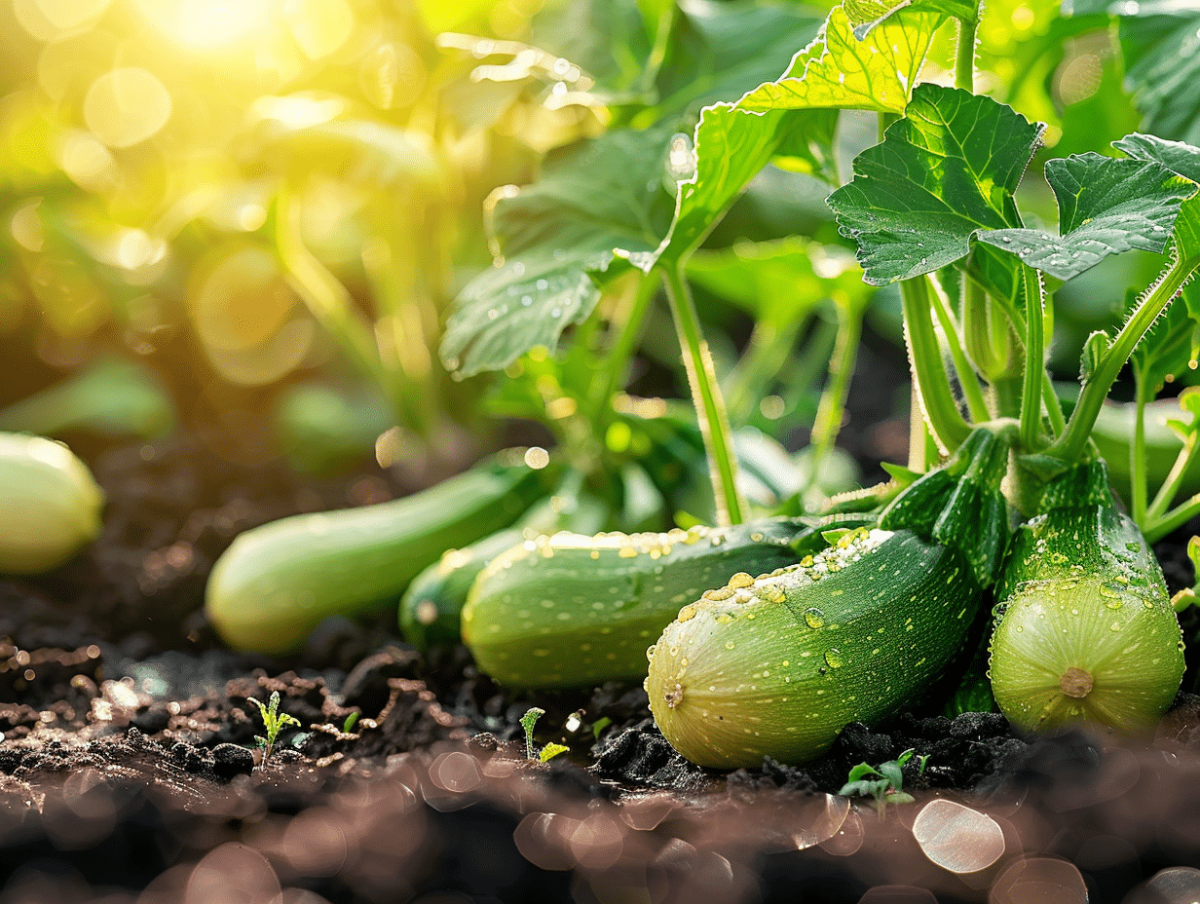
In the world of gardening, the quest for a bountiful and healthy harvest is often at the heart of concerns. Particularly valued for their flavor and versatility in the kitchen, zucchinis are among the essentials of the family vegetable garden. However, growing this fruitful vegetable can be tricky without the right methods. Gardeners, whether novice or experienced, are constantly seeking techniques to stimulate the growth of their vegetables. Optimizing zucchini yield involves a deep understanding of their specific needs in terms of soil, watering, light, and protection against pests.
The Secrets to Optimal Growth for Your Zucchinis
Growing zucchinis requires special attention right from the planting of young plants in the garden. To optimize growth of these vegetables, choosing a rich and well-drained soil is crucial. Zucchinis, members of the Cucurbitaceae family, thrive in an environment where water does not stagnate, to avoid root diseases. Make sure to enrich the substrate with compost or well-decomposed manure to provide the essential nutrients for the growth of these greedy vegetables.
The issue of watering zucchinis is also paramount. These plants require regular but moderate hydration, to keep the soil consistently moist without saturating it. An effective method is to mulch the soil to retain moisture and maintain a stable temperature around the roots. This simple action also has the advantage of limiting the growth of weeds, those unwanted plants that compete with zucchinis for nutrients.
Plant associations in the vegetable garden should not be overlooked. The proximity of certain companion plants can enhance the vigor of zucchinis. Among them, corn or climbing beans serve as natural supports, while nasturtiums attract aphids away from the young shoots. These plant alliances, beyond their aesthetic dimension, fit into a permaculture logic, aiming to create an ecosystem favorable to biodiversity and the robustness of crops.
From Planting to Harvest: Techniques and Tips for Generous Zucchinis
The cultivation of zucchinis begins with careful planting, which foreshadows an abundant harvest. Rooted in the traditions of Mexico, zucchini has conquered French gardens, particularly since 1929. Choose varieties suited to your climate and the space available in your garden. Sow the seeds directly in the ground or start with seedlings in pots that you will transplant after the last frosts. The distance between plants, about 80 cm, is essential to allow optimal development of leaves and fruits.
Monitoring is essential to prevent diseases and pest attacks. Regularly inspect the leaves for spots or deformations that could indicate the presence of mildew or weevils. A preventive treatment based on nettle manure or horsetail decoction can be applied to strengthen the plants’ resistance. Crop rotation is a wise technique to limit the occurrence of diseases specific to the Cucurbitaceae family.
Regarding the harvest, pick zucchinis when they reach the desired size; the frequency of harvesting influences the continuous production of fruits. Young zucchinis will be more tender and flavorful, ideal for use in various cooking recipes. This periodicity in harvesting stimulates the plant to form new fruits and ensures a generous harvest throughout the season. The popularity of zucchini in the 1980s, due to its increasing integration into gastronomy, has only heightened the enthusiasm for its gardening.